Groove Picking... 

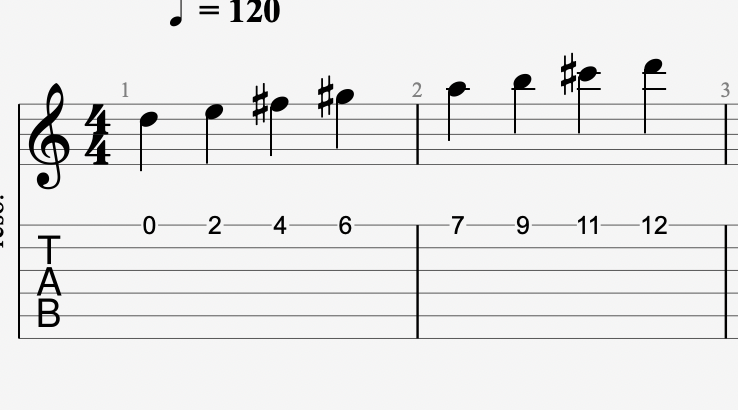
We are in open G this week in Slide Success classes, and we are going to start looking at a useful straight groove picking pattern.  This one formed the core of the riff we looked at last week and it is very useful to have this as a rudiment pattern that you can use in other ways.

Here is a little vid taking you through this one: https://youtu.be/D9N2VQYAXPw

Now what we are going to do is drill changing from a shuffle feel into this straight picking feel. This is a great exercise for getting you comfortable shifting between the two feels.

Then taking this exercise and adding in the chord changes of a 12bar blues progression, so playing the shuffle on the 1 chord (G) then switching to straight on the 4 (C) and 5 (D) chords:

Check out the video to see this in action : https://youtu.be/yzNp3KLT6Ss

To finish off, let's hear how this ability to switch and shift the feel is a key feature of the playing of Delta master Robert Johnson in the piece Walking Blues.

This piece is often played as a full on shuffle, the fantastic Eric Clapton version being a good example of this. I teach this piece to my students as a good way into the Delta style as it has all the key elements of the piece but stays rhythmically fairly straightforward.

The Robert Johnson version, on the other hand, has a bit more going on. It starts with the shuffle feel but then seems to drive forward into a more straight and dancey feel and shifts this feel back and forth.

Check out the video here where you can hear what I mean: https://youtu.be/UFn7kXyPJTM

The Delta players would have been playing in environments where it was important to get people dancing and grooving around so the driving straight feel was very important.  This ability to seamlessly shift the feel like this makes the Delta music fascinating from a rhythmic point of view and once this music moved to the more band oriented electric Chicago Blues style, a lot of this subtlety got smoothed out.

If you are a solo blues player and can inject a bit of this feel shifting onto your playing it will give your playing an interesting and very authentically Delta Blues vibe. 

Give this a go and let me know how you get on!


If you are still struggling to get to grips with the slide technique, book a call and we can talk about getting your technique sorted over the next few weeks. Explore my courses on my website to find the perfect fit!

Straight Blues Grooves 

The shuffle feel, with its laid back swing, is so important to blues but so is the more driving and funky straight groove. 

I have a cool riff to teach you for a groovy straight feel but before we do that let's look at the subtle but distinct difference in feel between swung and straight groove and a simple exercise for switching between the 2 feels.

As we discussed before, the shuffle feel is defined by its long short quality.  Without getting into the theory of that again, basically the notes are unevenly spaced - a long followed by a short to give the distinct lolloping feel.

The straight feel by contrast has evenly spaced notes giving its driving quality.

Check out this video for a bit more context on that: https://youtu.be/VFSHnXrC8vA

Now here is a simple exercise to get to grips with these 2 feels and also how to get used to switching between them, which as I will get onto in the future is a way of really elevating your blues playing.

 This one is in open D but you could do the same thing on the 5th and 3rd strings in open G.

 You will see this is not the most exciting bit of tab in the world as nothing appears to change except the instruction that you see over bar 1 which denotes the shuffle feel.  This changes to the “no Shuffle Feel” instruction on bar 5.

 To really get a feel for this subtle change you need to see/hear it in action here in the video:  https://youtu.be/4iMoerFyizc

To finish up, let's learn a cool straight feel riff in the G tuning that will come in useful.

I call this Pony Blues groove as it’s inspired by the Allman Brothers version of Pony Blues:

Here is the video lesson on how to play this:  https://youtu.be/MVcM2MBQe1w

I hope you're feeling inspired to pick up your guitar this weekend and play some slide! Grab your FREE Get Going with Slide Guide here to help…

Michael Messer & Phillip Henry’s Slide Guitar Festival 2026 

Book now for the UK Slide Guitar Festival 2026, November 13, 14, 15, 2026 - Folkestone, Kent. This will be a great weekend event for everyone involved. If you love slide guitar you will learn a lot, make new friends and have a great time!

The numbers are limited and that makes an intimate and friendly environment that is really good for teaching, learning and sharing knowledge. Phillip and Michael have a lot of experience playing and teaching slide in all its forms. The event is open to players of all levels and everyone is in the classes together. This way we all get to be part of everyone’s learning experience and nobody is left out. If a student needs some extra tuition, there will be someone there to spend time with you. We have run our classes in this way for a long time and it really works. 

The classes will be relaxed and informal. While we are all there to learn and share our knowledge, this is not school!  

The whole event is held in a very nice hotel on the seafront with excellent facilities, and there will be a concert at a venue in Folkestone on Saturday 14th. The feedback from last year's inaugural festival was fantastic so don't miss out!

Here's a little more detail for those who love the small print:

No electric guitars are allowed in the classes, only acoustic and resonator guitars. 

Phillip Henry (that's me) is a BBC Folk Award winning slide guitarist who has spent the last 20+ years travelling the world, collecting tunes, stories, and instruments.

Phillip brings together world music influences from Indian classical music to the blues, with instruments ranging from mellow Weissenborn depths and spectacular Dobro flourishes, to the sounds of the rare Indian Chaturangui (a 22 string guitar from the sub-continent acquired while he studied under slide master Pandit Debashish Bhattacharya). Here is a fusion of global styles deeply infused with Henry's British folk roots, and brought together with a considered beauty all his own.

Phillip Henry is an in-demand performer known for collaborations with fellow musicians such as Peter Knight (Steeleye Span), Steve Knightley (Show of Hands), and Hannah Martin (Edgelarks). Recently Phil has been touring the UK with the Gigspanner band. His many musical travels have led to the evolution of a unique instrumental style that has wowed audiences around the world.

Phil is also an in-demand slide guitar tutor. His popular Slide Success online slide guitar courses are providing a route into slide guitar playing for students from all over the world. He has given masterclasses at music festivals from Vancouver Island to the Blue Mountains of Australia. He is passionate about sharing the joy of slide and is looking forward to bringing it to Folkestone for our second Slide Festival weekend.

--------------------------------------------------------------------------------------

Michael Messer is a virtuoso slide guitarist, singer, songwriter and roots & blues innovator.

Throughout his 45 year career his music has remained individual and contemporary. Michael’s reputation as an innovator of the blues and master of slide guitar is well known. Being British with an international reputation for blues slide guitar is a rarity in itself, but Messer's obsessive appetite for knowledge of his art is virtually unrivalled. His stunning slide guitar playing and superb vocals ooze authenticity and integrity. His use of turntables in the Second Mind Band marked him as one of the trailblazers of the noughties blues sound and his blues-Indian trio, Michael Messer's Mitra, once again broke new ground by playing an exhilarating and accessible fusion of rural blues and Indian classical music.

Johnny Cash was a fan of Michael Messer's music and wrote the liner notes for his 1993 album "Rhythm Oil", a rare honour shared only with Bob Dylan on the Nashville Skyline album. Rhythm Oil was awarded Import Album of the Year by the Austin Texas music press. Messer's "King Guitar" album reached number one in the US Living Blues chart. "Second Mind" won Best International Guitar Album of the Year and the American magazine 'Spirit' listed Messer as one of the greatest slide guitarists ever, alongside Duane Allman and Ry Cooder. Michael's current project is with renowned songwriter and musician, Chaz Jankel. Their highly rated album "Mostly We Drive" released in 2024 received numerous rave reviews and featured on radio shows across the world. Michael has released ten albums, produced albums for other artists, toured worldwide, recorded numerous live radio/TV sessions and even appeared in his own 'Blues' episode of BBC TV show “Zingzillas”. Michael also has a successful line of guitar products, including MM Resonator Guitars and MM Newtone Resonator Guitar Strings. 

Michael is an experienced tutor with 25+ years teaching slide guitar and running his own weekend tuition events.

--------------------------------------------------------------------------------------

The cost of attending this event including single occupancy double hotel room for two nights, including breakfast, Friday night buffet, Sunday snack lunch, all classes, Saturday concert is £595.00. There are other options such as sea view rooms and double occupancy, and they can be discussed one to one by email.

For information and to book a place contact info@michaelmesser.co.uk or philliphenrybookings@hotmail.com

I'd love to see you there!

Glass vs Metal Slides: Does It Actually Matter? 

If you’ve started exploring slide guitar, you’ve probably run into the classic question: glass or metal? It’s often framed like a big decision, almost like choosing your musical identity. The truth is a bit less dramatic, but it does matter in ways that shape your tone and feel.

Let’s start with the basics. Glass slides tend to produce a smoother, warmer sound. The attack is softer, and there’s less string noise. Players like Bonnie Raitt often lean toward glass because it complements expressive, vocal-like phrasing. If you’re aiming for blues, soul, or anything melodic and fluid, glass can feel forgiving and musical right away.

On the other hand, metal slides, whether steel, brass, or chrome, bring a brighter, more aggressive tone. They have more bite, more sustain, and a sharper attack. This is part of what gives players like Duane Allman that cutting, singing tone that slices through a band mix. If you’re playing rock or need more volume and presence, metal might feel like the better tool.

But here’s where things get interesting: the material doesn’t just affect sound, it affects how you play.

Glass slides are usually lighter, which makes them easier to control, especially for beginners. You’ll find it simpler to avoid pressing too hard or knocking into frets. Metal slides are heavier, and that weight can actually help with sustain, but it also demands better technique. If your muting isn’t solid, metal will expose every unwanted string noise.

There’s also a psychological factor. A heavier slide can encourage you to play more deliberately, while a lighter one can make you feel more agile. Neither is “better”, they just push your playing in slightly different directions.

So, does it actually matter? Yes, but not in the way most people think. It’s not about right vs wrong; it’s about matching the tool to the sound in your head.

If you’re unsure where to start, try this: play the same simple phrase using both a glass and a metal slide. Listen closely to the attack, the sustain, and how easy it feels to control the note. Pay attention to what inspires you more and you'll have your answer.

In the end, great slide players aren’t defined by their gear. Derek Trucks could pick up almost anything and still sound like himself. Your goal isn’t to find the “perfect” slide, it’s to find the one that helps you to express something worth hearing.


Check out my Get Going with Slide Guide to get started, and explore my courses online here


Learning Guitar at Any Age: Why It’s Never Too Late 

There’s a persistent myth that musical ability belongs to the young, and that if you didn’t pick up a guitar as a child, you’ve somehow missed your chance. The truth is far more encouraging: people learn guitar successfully at every stage of life, and each age brings its own unique advantages.

Children's brains are highly adaptable, making it easier to absorb new patterns, develop rhythm, and build muscle memory. However, they may lack patience or long-term focus. Progress can depend heavily on encouragement, structure, and making learning feel like play rather than practice.

Teenagers tend to learn quickly because they combine mental adaptability with growing discipline. This is often the age where passion plays a huge role: wanting to learn a favourite song or emulate a musician can drive hours of focused practice. The challenge here is consistency; many teens are swamped by the pressures of school and may also change their interests as they get older. 

Adults, on the other hand, bring something incredibly powerful to the table: intention. Choosing to learn guitar later in life is often a deliberate decision, which means practice tends to be more focused and goal-oriented. While adults may worry about slower finger dexterity or memory, they often make up for it with patience, problem-solving skills and the ability to follow structured learning methods. In fact, many adults progress faster than expected because they understand how they learn best.

Older learners sometimes face self-doubt more than physical limitations. Thoughts like “I’m too old” can be more of a barrier than the learning process itself. In reality, playing guitar can improve cognitive function, coordination, and even emotional well-being. It’s not just about mastering chords, it’s about enjoying the journey and staying mentally active.

No matter your age, the fundamentals remain the same: consistency beats intensity, small improvements add up, and enjoyment fuels progress. You don’t need to become a professional musician to benefit from learning guitar. Whether you’re strumming simple chords or tackling complex solos, every step forward is meaningful.

So if you’ve been hesitating because you didn’t start young, let that idea go. The best time to start may have been years ago, but the second-best time is now.


You can pick up your free Get Going with Slide Guide here, and explore my courses here

Happy sliding!

The Joys of Touring 

Life as a touring musician is a mixed bag - some of my gigs bring me to fabulous locations such as The Marine Theatre in Lyme Regis, where the view from the stage door is something special! Others are less picturesque, and the sound quality varies every time. 

It's challenging to adapt to a new set up and different acoustics every night, and I love to have my kit set up so I can keep as much consistency as possible. 

A tour can be a good opportunity to try out new material and get a little experimental - and, of course, the audience is different every time, too! 

We've just finished an extended UK tour with the Gigspanner Big Band, and it's been a brilliant experience. We've had the kids on the road with us, which brings its own challenges, and this has made it a really memorable time. As well as the different venues, we've explored towns and cities all over the UK and this is a treat in itself. 

Now it's time to recover before the festival season starts in earnest, and I'm taking every opportunity to get out in the sunshine and play guitar al fresco.

I'd love to hear about your touring experiences or favourite practice spots…

Happy sliding!

If you'd like to get involved, you can explore my slide guitar resources here, or pick up your free Get Going with Slide Guide here. 


The Slide Shuffle Riff 

Last week, we took a good look at the shuffle feel, and today I'm looking at the importance of this in Blues, and the Slide Shuffle Riff. Here's a youtube lesson if you want to see me exploring the concept in a little more detail:

The Importance in Blues

The shuffle feel isn't just theoretical; it's a cornerstone of playing blues across any instrument. If mastering it feels challenging, remember that it's more about absorbing and internalising the feel than getting bogged down by theory. Conceptualising the pattern as "long, short, long, short" helps grasp the essence of the rhythm.

To genuinely hone this feel, practice at a slower tempo until you gain control and confidence. Once comfortable, gradually raise the tempo while maintaining the iconic shuffle character. Remarkably, even at higher speeds, the shuffle feel remains unique and unmistakably blues.

Embracing the Shuffle Vibe

The key to blues lies in not just mastering the rhythms but embracing the easy-going, swing vibe that accompanies it. Get physically involved with your instrument - let the shuffle rhythm guide you as you play. Through practice, the shuffle feel will become second nature, enriching your performance with a classic blues rhythm that resonates with listeners.

In conclusion, whether you're a seasoned musician or just dipping your toes into the blues, the shuffle feel is an indispensable tool in your musical arsenal. Embrace its distinctive groove, and you'll find yourself at the heart of what makes blues music so enduring and beloved. 

Happy shuffling!

If you want to get started with slide, pick up your FREE Get Going With Slide Guide here, or find out more about my courses here.

Mastering the Shuffle Feel: A Key to Blues Perfection 

Today I'm taking it back to basics to look at the concept of the shuffle feel. This is really important to playing slide, so it's worth investing some time in getting it under your belt. 

Understanding the Shuffle Feel

Often referred to as a swung triplet feel, the shuffle feel operates within a time signature of 4/4 - meaning there are four beats per measure. However, the magic happens when each of these beats is divided into three, forming triplets. Instead of the straightforward count of "one and two and three and four," a shuffled pattern transforms these beats into "one and, uh, two and, uh, three and, uh, four and, uh."

But what exactly makes this different? It's all in how you bind the triplets together. To create the quintessential shuffle groove, you take the first two notes of the triplet and tie them together, resulting in a longer note followed by a shorter one. This produces what is often termed the long-short, long-short pattern that defines the shuffle feel.

Applying the Shuffle Groove

Visualise the shuffle groove as having three triplets per beat—each encompassing roughly a third of the beat's duration. By linking the two initial notes of each triplet, you establish a rhythm that feels like "one and two and three and four," deviating from the typical "one and, uh, two, and." This pairing imparts a distinctive rocking or shuffling sensation, akin to a gentle lollop.

I'll leave it here for today, and I'll explore the Slide Shuffle Riff next time. Breaking it down into small, manageable chunks makes everything easier and, as usual, practice makes perfect! Happy shuffling!

If you're not familiar with this or you're having trouble getting into the shuffle feel, you can take a look at my lesson on the basics here: 

Happy shuffling!

Walking Bassline Shuffle Groove 

Let's take a look at a walking baseline that you can use in the open D tuning to that shuffle groove we looked at in a recent blog post.

First of all here is a little recap of how you can use a thumb and finger combination to play a very effective shuffle groove which is also quite an easy way of increasing the shuffle tempo.

Taking Shuffle up in Tempo with thumb finger trick: 

https://youtu.be/EAIYNwKI2_E

And here’s a nice walking baseline that takes you round a 12 bar blues in open D.  These are all fretted notes so it's not so much a slide thing but a good addition to your open D knowledge.

Here is the tab :

Here is the video: : https://youtu.be/rZFriep2-T8

Now all we need to do to make that walking baseline shuffle is to punctuate each of the baseline notes with a finger stroke on the open fourth string using that two finger trick we talked about.

Here  is the tab for that :

And here’s a quick video showing how to play that and also some variations :

 Adding Shuffle To the bassline: https://youtu.be/t416ZFiS8PY

Give this a go and have some fun with it. 

Happing sliding!


You can pick up your Get Going with Slide Guide here, or check out my courses here


Can I Learn Slide Guitar Online? 

If you're new to playing slide guitar, you might be wondering how learning online works. After all, it's not easy to learn a musical instrument in person, let alone through the medium of a screen! However, not only can it be done, it can be a great way to learn that gives you the space and time to practice as well as the expertise you need to build your confidence and develop your own style. 

Let's face it, we all spend a lot of time online and whether you're a total beginner or an experienced slide player, you can access tuition and tips online that will transform your playing. The most important thing is that wherever you're starting from, you have a teacher who gets it and a bunch of excellent resources that you can access whenever you need them. And by lucky coincidence… that's exactly what I'm here for! 

My courses provide structured video lessons that break down great slide playing into manageable steps. We start with the basics: choosing the right slide (glass, metal, or ceramic), where to wear it (usually ring or pinky finger), and how to control unwanted string noise. From there, we move into open tunings like Open D or Open G, and we look at how to achieve that classic bluesy resonance.

One of the biggest advantages of learning online is visual repetition. Slide guitar is highly visual - you really need to see how the slide glides over the strings and how the picking hand mutes excess noise. With video lessons, you can pause, rewind and replay difficult sections until your muscle memory catches up.

However, this isn't all - I also offer live lessons, one to one sessions where we can really get stuck into the process and address issues you're having, and a very supportive, friendly community to connect with others and share the journey. You can hop on over to Facebook and join my Learn Slide Guitar community to find out more, and when you sign up to Slide Success, you'll also have access to the private group where lessons are shared and students can get personalised support. 

When you learn slide guitar online, you're in control of the process and I have a range of courses to suit you and your preferences. Whether you're looking for a quick brush up on a certain technique or you'd like to start from scratch with slide guitar, I've got you covered. You can learn at your own pace, revisit tricky techniques and explore a wide range of musical styles in your own time, and with consistency and practice, you'll soon be playing  smooth, expressive slide.

Check out my courses here or pick up your free Get Going with Slide Guide and get started today!