
Here's a simple guide to how to introduce a bit of gospel flavour to your 12-bar blues. This features in my Slide Success courses and live lessons on Facebook - you can find out more here or join the Learn Slide Guitar Facebook group to join me.
Whether you’re new to guitar or looking to spice up your sound, this guide will help you add a soulful, jazzy vibe to your blues playing. Let’s jump in!

What is Gospel Blues?
Gospel blues combines elements of jazz and blues. It includes more complex chords and switches some chords to create a unique and soulful sound. This mix gives your blues a fresh, jazzy feel.
Understanding Chord Names
To talk about these variations, we'll use a numbering system: chord 1 (root), chord 2 (chord formed on second note in the scale), and so on. So for instance, in the key of D, your chord 1 is D major. Chord 4 is G major, and chord 5 is A major. These are the ones you use for your standard 12-bar blues: 1 - 4 - 5.
This approach helps you apply the ideas in any key, making it easy to play in different keys without needing to transpose notes. We can talk about any of these ideas when you book a one to one call to get started with slide.
Changing the 12-Bar Blues
The 12-bar blues is the main structure in blues music, using the chord progression explained above: 1 -4 - 5.
By slightly changing this pattern, and introducing a few extra chords, we can add a gospel flavour.
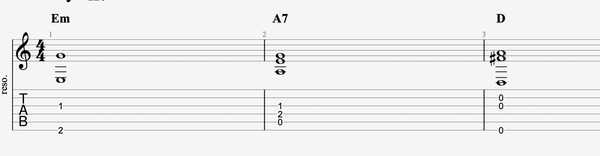
A key part of this change is using the 2-5-1 chord sequence, which is common in both jazz and gospel. In the key of D major, the 2 - 5 - 1 sequence would be E minor - A7 - D major.
Here's an easy way of playing that in the open D tuning:
|
|
This progression provides a smooth, pleasing feeling of resolution.
Creating Tension and Release
To give your blues a gospel feel, create tension with certain chords, then resolve it smoothly.
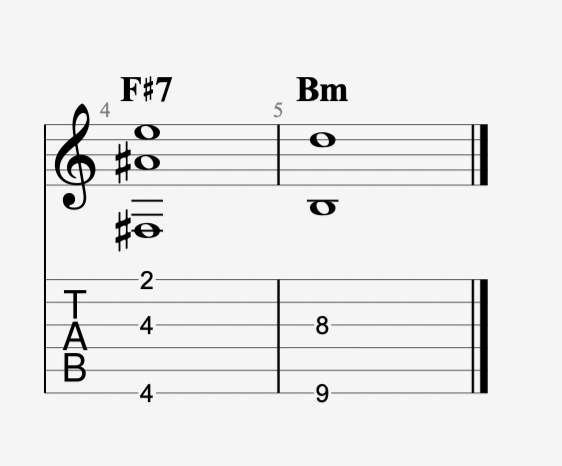
Before using the 2-5-1, we can add a 3-6 sequence with some different chords.
In the key of D, we're going to play this using F#7 - B minor.
Here's an easy way of playing this progression in the open D tuning:
|
|
This combination builds up suspense and then eases into the classic gospel sound of the 2-5-1 we looked at earlier.
Putting It All Together
Now lets add this 3-6-2-5-1 sequence into our classic 12 bar blues.
Here is the standard 12-bar blues progression in D:
D | D | D | D7,
G7 | G7 | D | D,
A7 | G7 | D (turnaround) | D/A7.
Here's how you add in the gospel variations we've discussed, highligted in blue is the 3-6-2-5-1 progression:
D | D | D | D7,
G7 | G7 | D/F#7 | Bm
Em | A7 | D (turnaround) D/A7
Notice how it's just a portion of the progression that gets changed but it has quite an effect on the overall feel.
Here's a video of me playing the sequence around a slow blues with a bit of slide.
Conclusion
Gospel blues is all about emotion and soul. It's a great way to break out of the standard 1-4-5 blues, create interest, and add a more soulful flavour to your blues playing. It works even better with the 8-bar blues, which is what I'm going to talk about next week.
So are you up for the gospel challenge? If you'd like the FREE tab to help you along, just send me an email and I'll get it sent over to you.
Are you ready to get started? I'll get you playing the slide with one of my courses: Click here to find out more!