
This week, it's back to basics. My approach to slide guitar is that you have to start with the foundations (coincidentally, I have a course for that 😉 - check out my Foundations course here - https://members.slidesuccess.co.uk/p/slide-success-foundations )
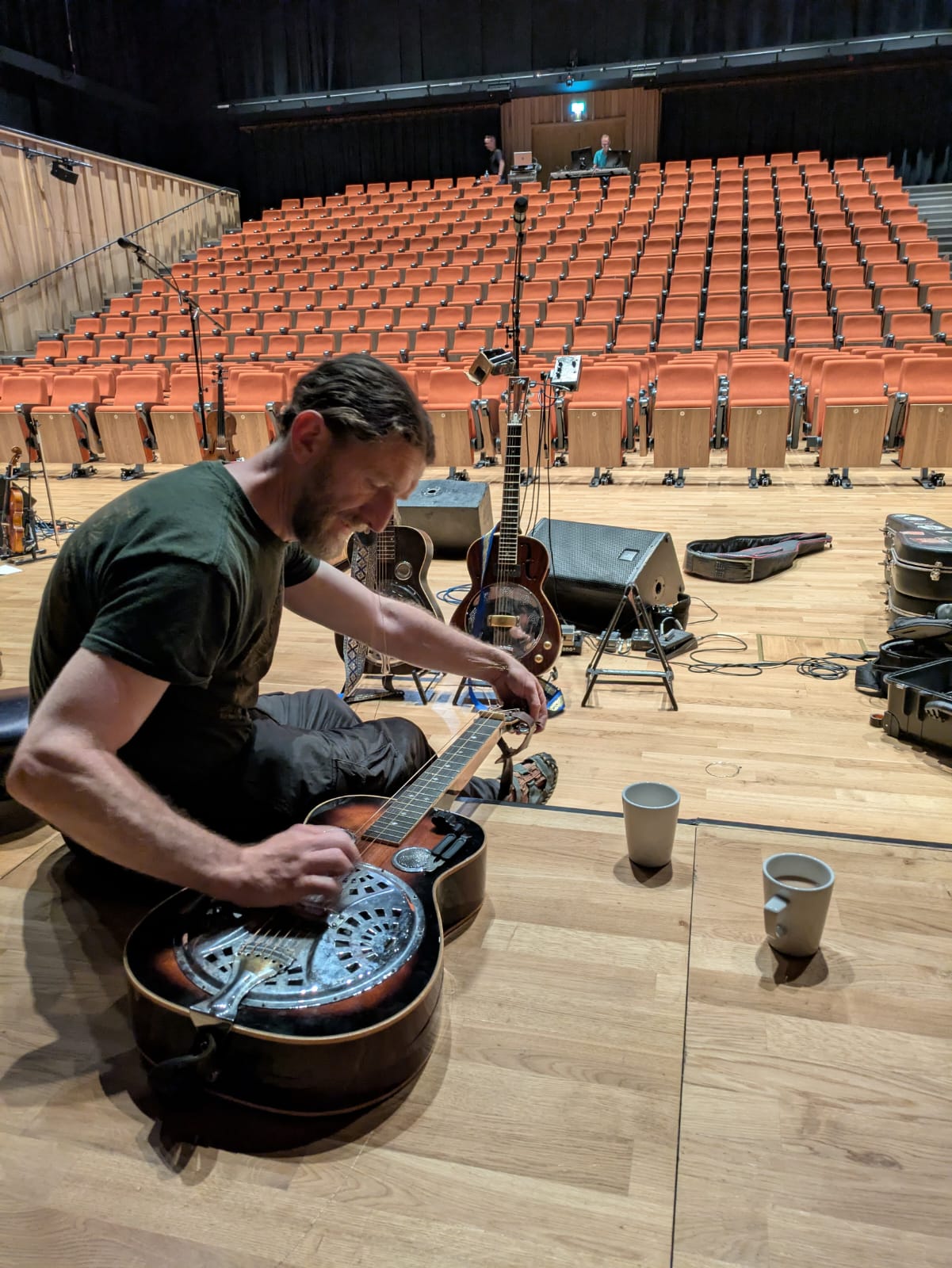
And one of the most essential basics is tuning. You can have everything else in place - great tone and touch, groovy riffs - but if the tuning is off, the whole piece falls apart. So here’s my breakdown for how to ensure your tuning stays on point.
- Ear training. As with anything, practice is the key. The more you train your ears to search for detail and precision in your pitching, the more automatic it will become. Having a deep-listening ear training session is a great way to warm up and start your practice session; plus it sets you up to continue with good tuning once you get on to playing more complex pieces. So here’s a good way to do it. Get yourself a drone to play against. This can be an app such as Tampura Droid (an Indian style drone instrument which I find gives a pleasant drone with overtones to pitch against); or an instrument such as a keyboard. Or you can use the lower strings on your guitar itself. In the video example I’m playing the D major scale on the top string and using the open D string below as my reference point. Once you have your drone set up, play the scale very slowly and carefully over the top of it.
- Stay relaxed. The key to staying in tune is careful and responsive listening. As soon as something feels turbulent or out, you need to make tiny adjustments to your position in order to correct your pitch. You can only do this if you are relaxed. Then you can make small, subtle and fluid adjustments keeping your notes nicely in tune.
- Slide in and out. When you go deep with tuning, it can get really confusing and hard to tell whether you need to adjust up or down in order to get in tune. If you find yourself there, don’t panic! It generally means you’ve achieved a much deeper level of listening than before. Practice starting waaaay below your note, and sliding up to it very slowly. Listen to how the sound changes - tune in to all the overtones you are hearing. When the turbulence settles, that’s when you’re in tune.
- Go slow. This can be a really meditative and intense practice technique. If you’re going to commit to it, go slow. There’s really no point racing through this. It’s all about giving yourself a chance to scan over all the elements of your playing in real time.
- Keep it short. The success of this kind of ear training practice relies on your presence. You can’t reel this off automatically, and if you do, you’ll be ingraining bad habits which will only make good practice harder in the future. So keep to short sessions, at least initially, and block out all distractions. As soon as you find yourself losing proper concentration, move on. And you’ll start hearing results fast. If you can do just a few minutes a day of this kind of ear training, your tuning will get better and better.
Here’s a little extract from some of my course material giving you an example of how to go deep with your tuning and come out with the right results: https://share.descript.com/view/Faqclv5aGgW
Need any help?
If you're having any issues with your tuning, or any other aspect of learning slide guitar, I'm here to help! Just drop me a line or head over to the Learn Slide Guitar Facebook Group.
Tuning is a fundamental slide technique and so is covered in depth on my Slide Success Pro membership - I zone right in and provide you with all the resources you need to nail it. If you're interested in taking your slide playing to the next level, have a browse of the courses I offer: https://members.slidesuccess.co.uk/p/home
Happy slide playing! Pick up your free Get Going With Slide Guide today and let me know how you're getting on.