
Whether you're a seasoned guitarist or just starting out, the art of using a slide can elevate your playing style. There's no single way to hold a slide, and each player will find their preferred method. Today, I'll share my favorite techniques and explore some alternatives. The goal is to maintain as much sensitivity in your hand as possible while wearing a slide.
Understanding the Basics
When you wear a slide, it's crucial to select a method that minimises the loss of sensitivity inherent to slide playing. Holding the slide on the little finger is my preferred method, but these concepts also apply if you choose to use your ring or middle finger.
Little Finger Positioning
Holding the slide on the little finger allows for a natural guitar-playing position and gives you 3 free digits to use for fretting notes and holding chords.
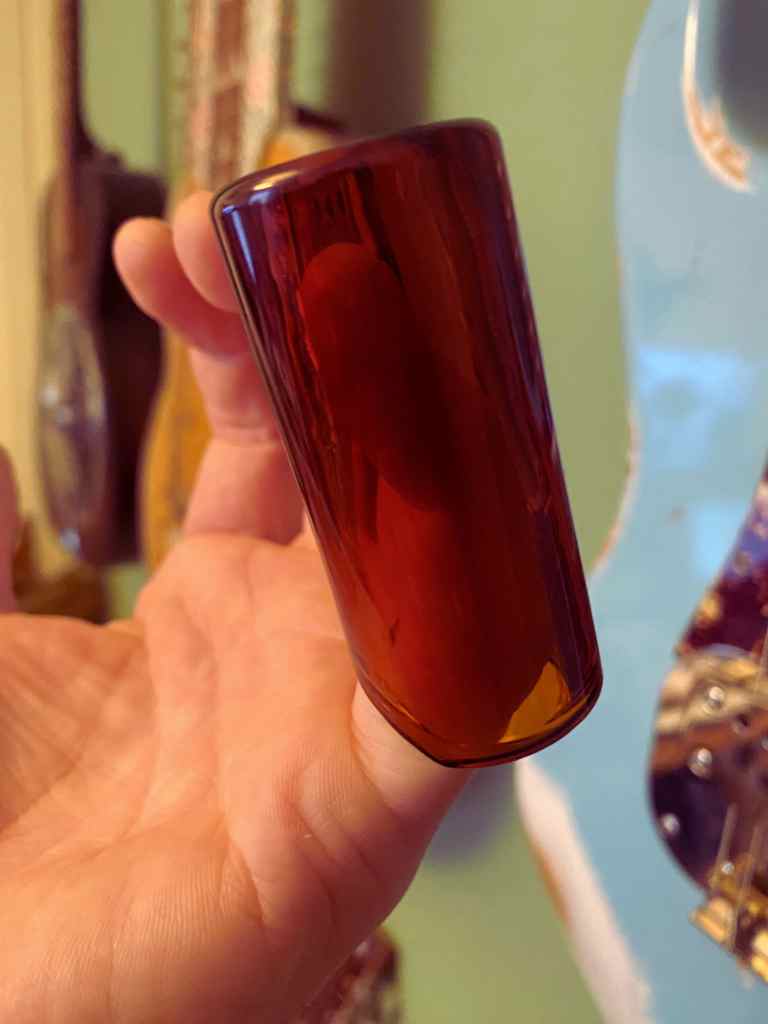
Ideally, maintain your fingers' natural curve, allowing the slide to rest between the two knuckles without limiting movement. If the slide rests at the bottom of your little finger, it can restrict your finger's bending ability, impacting your playing.
Choosing the Right Slide
I've mentioned this often before, so in short: Opt for slides that provide some room for your finger, enabling the natural curve to remain. Slides with cutaways can help maintain this position. Remember, if your slide slips down, it can be a minor inconvenience and can always be pulled back up into position. Or you could look for a way of keeping it exactly where you want it - like capping the end of the slide or using an already capped slide.
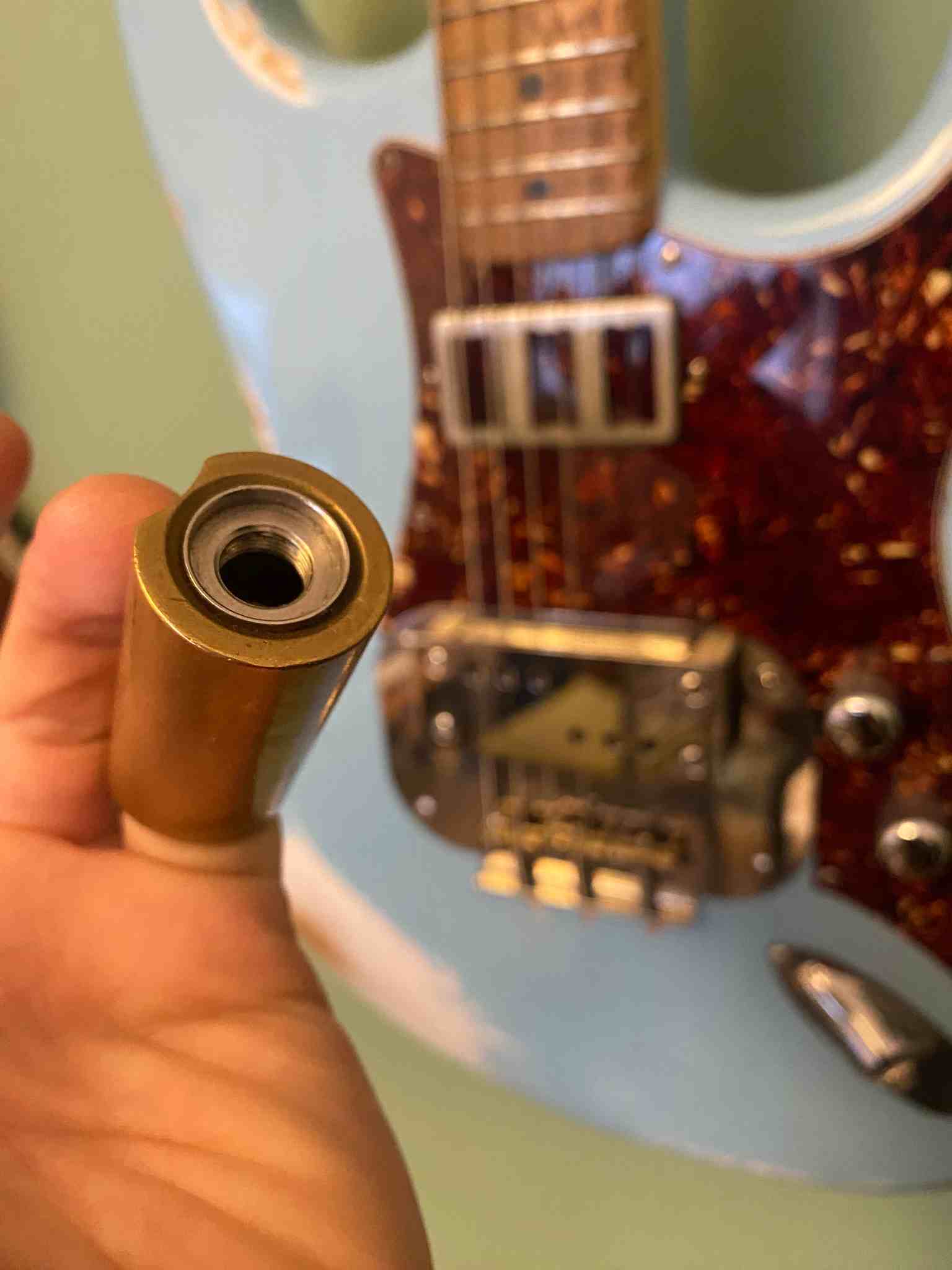
Here is my Rockslide with the end screw of a jack socket dropped in which holds it just where I want it. You could try a piece of cork or blue tack.
Exploring Alternatives: Ring and Middle Fingers
Many players also prefer using their ring fingers for slide playing. Slides often naturally stop at the second knuckle due to its thickness, facilitating a good position for playing. This method is famously used by guitarists like Derek Trucks. It can feel more comfortable and stable on this finger as the slide has a digit either side to support it and it is closer to the middle of the hand. As it feels easier at first, I find people often opt for this finger. You can still fret notes with the remaining fingers and it opens up different fretting options like long stretches between the index and middle fingers.

Similarly, wearing the slide on the middle finger can simplify the grip, especially for players like Bonnie Raitt. It allows ease of control using the thumb and index finger for muting and stabilisation.
The Importance of Other Digits
Beyond the chosen slide finger, the support from other digits is vital:
- - Ring Finger: When using a slide on the little finger, support it with the ring finger to stabilise and secure the slide.
- - Middle Finger: Often used for muting or supporting the slide, keep it handy for these tasks.
- - Thumb: Gently rest it on the back of the neck for stability and use it as a pivot for vibrato.
- - Index Finger: Essential for muting "ghost notes," the index helps ensure a clean sound without unwanted overtones.
Developing Your Technique
Each guitarist's hand shape and movement are unique, influencing how these techniques apply. Don't hesitate to adjust the strategies to find what feels most natural for you.
Incorporate these tips into your practice, experiment with different slides, and ultimately, discover your own approach.
Enjoy the experience and keep on sliding!
Pick up your FREE Get Going with Slide Guide here to get started or check out my online courses to find the best fit for you.