
There's a moment that happens to almost every slide player at some point.
You're playing along, following the changes, hitting the right positions, and it sounds... almost right. Almost like the records. Almost like the players you've been listening to for years.
But not quite.
And it's frustrating because you can't put your finger on what's missing. You know the notes. You know the positions. But something isn't there yet.
I've been teaching slide for 20 years and I've seen this moment hundreds of times. And almost without exception, the missing ingredient is the same thing.
It's the note that lives between the frets.
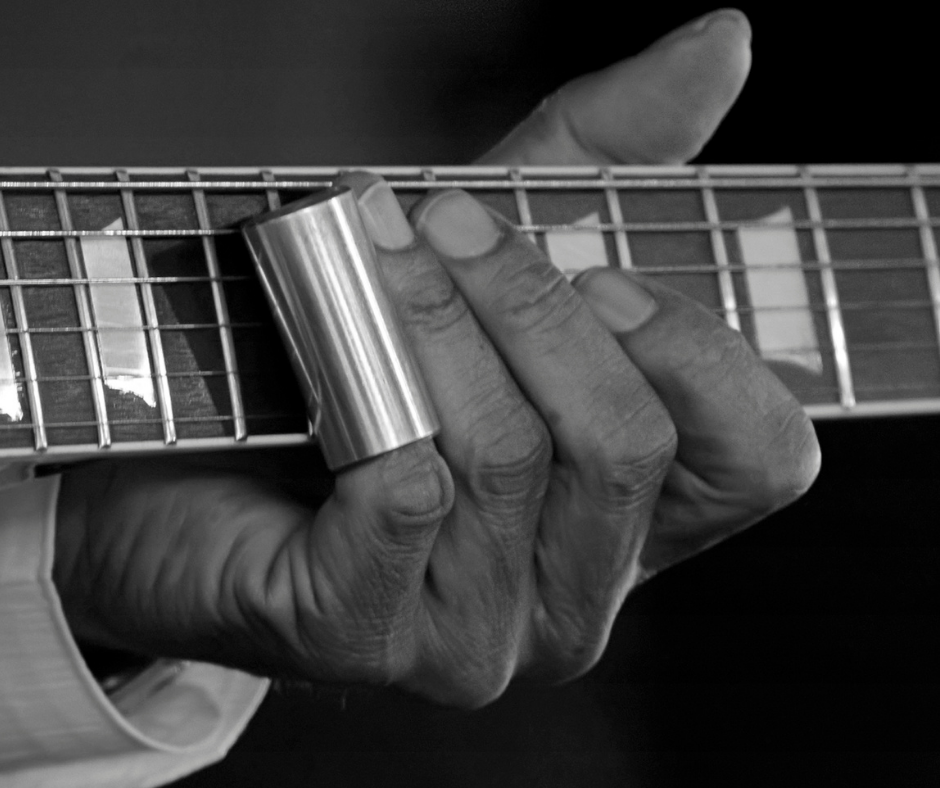
The blue note squeeze
Here's what I mean.
In Open D, if you put your slide on the third fret of the top string, you've got a minor third. Dark. Tense. Very blues.
Move up to the fourth fret and you've got a major third. Brighter. More open.
Now here's the thing: the note that makes blues sound like blues doesn't live at either of those frets. It lives somewhere in between. And as a slide player you have something that no fretted guitarist has; the ability to find that note, sit on it, squeeze toward it, blur between minor and major and find the exact shade of blue you're looking for in any given moment.
That's the blue note squeeze. And once you start hearing it you'll hear it everywhere. In Blind Willie Johnson, in Elmore James, in Ry Cooder, in every great slide player you've ever admired.
It's not a scale position. It's not something you can write down in a tab. It's a feel.
How to practice it
Start simple. Put your slide on the third fret of the top string in Open D and play that note. Hear the minor quality - dark, slightly tense.
Now very slowly move the slide toward the fourth fret. Don't jump to it. Creep toward it. Listen to what happens in between. Somewhere in that movement the note starts to open up, to brighten - somewhere in there is the blue note.
The key is the movement itself. You're not landing on a fret. You're passing through a feeling. The speed of that movement, how far you go, whether you come back… all of that is expression. All of that is yours to control in a way that a fretted guitarist simply can't.
Try it slowly at first. Third fret to fourth fret and back. Then experiment: what happens if you only go halfway? What happens if you squeeze toward the fourth fret and then release back to the third? Listen carefully to the difference.
This is what Blind Willie Johnson was doing. This is what makes Elmore James sound like Elmore James rather than someone playing his licks. The notes are the same. The feeling between the notes is everything.
This is also one of those things that's genuinely hard to develop on your own because you can't always hear what someone else can hear from the outside. It's something I work on with students a lot. A fresh pair of ears and a few specific pointers at the right moment can move this forward faster than months of solo practice.
If you want that kind of help, you know where I am.
You'll find my courses on my website and I'm ready to get started whenever you are.
See you on the back porch.