
I grew up in Lancashire. And like a lot of kids who grew up in Lancashire, the Beatles were impossible to avoid. Even in the nineties, decades after they'd split up, they were still part of the air you breathed up there. You grew up knowing every song.
But it wasn't the early Beatles that got under my skin. It was what happened when George Harrison started bringing the sitar in. That sound - the drone, the microtonal quality, those notes that didn't fit neatly into Western tuning - lodged in my head and never quite left.
I didn't know it at the time but that was the beginning of a twenty year journey that would eventually take me to Calcutta.
The plan
By the mid 2000s I'd been playing slide guitar seriously for years and I'd been listening to Debashish Bhattacharya for almost as long. If you don't know his work, go and find it. Grammy nominated, BBC award winner, the man widely regarded as the greatest living Hindustani slide guitarist. His recordings stopped me in my tracks the first time I heard them.
I found out he taught. He'd opened a School of Universal Music in Kolkata and he accepted international students. There was an application process. I applied.
I also applied to the Arts Council for funding. They said yes.
In 2008 I flew to Calcutta.
90 days
I was there for three months. Which is something I think about every time I talk to students about the 90-day coaching programme — because 90 days is exactly enough time to transform your relationship with an instrument, if you approach it right.
I studied in Debashish's home. One to one sessions and group sessions, in the Indian guru-student tradition that goes back centuries. He taught technique, repertoire, the Indian classical approach to the instrument. But the thing that changed me most wasn't any of that.
It was the ear training.
In Indian classical music you sing before you play. Always. The melody lives in the voice first and the instrument follows — trying to reproduce what the voice can do, trying to match that human, vocal quality. Every session started with singing. Every phrase was sung before it was played.
As a slide guitar player that concept hit me like a thunderbolt. Because that's exactly what the slide should be doing — following the voice, imitating the voice, reaching for the kind of expressiveness that only the human voice has. The connection between the slide technique and the voice that I'd been groping toward for years suddenly had a framework. A tradition. A thousand years of thinking behind it.
Sing it first. Then play it. If you can't sing it you can't play it.
That's something I pass on to my students now. It sounds simple. It isn't. But it changes everything.

The instrument
I also went to Calcutta to get a Chaturangui.
The Chaturangui is Debashish's own custom instrument — designed and built by him, patented, unlike anything else in the world. The name breaks down as Chatur meaning four, ang meaning colour — four colours, four voices within one instrument. It's a lap slide guitar with 24 strings — six principal strings in Open D tuning, plus drone strings and fourteen sympathetic resonating strings that ring in response to the notes you play, like the strings on a sitar.
The design was partly inspired by the Weissenborn — the hollow-necked Hawaiian slide guitar. Which tells you something about how all these traditions keep finding each other. Hawaii, India, the Delta blues — all reaching for the same thing from different directions.
I practised on the Chaturangui I brought home. It's still one of the most extraordinary instruments I've ever played.
An eastern flavour — try this on your slide
One of the surprising things about the Chaturangui is that it's tuned to Open D — the same tuning you already know. The Indian classical tradition and the Delta blues arriving at the same starting point.
Here's something I discovered when I got to Calcutta. Before I went I'd already been experimenting with a particular sound on the slide — raising the 4th of the scale slightly to give it a floating, luminous quality. I'd written a piece using it called Reverence, drawn to that sound without quite knowing why.
When I got to Calcutta, Debashish pointed out that I was playing in the Kalyan thaat — the great parent mode of Hindustani classical music, the scale family that contains Yaman, one of the most important ragas a student learns. In the West we call it the Lydian mode. I'd arrived at it by instinct and it turned out to have a thousand years of tradition behind it.
In Open D the raised 4th sits just above fret 5 on the top string. Try this — play slowly up the scale on the top string, one fret at a time. When you reach fret 5 keep going. Skip over it to fret 6. Feel what happens. That's the moment the scale opens up — the familiar major sound suddenly has something else in it. A shimmer. A sense of space. That one extra semitone is the difference between the major scale you already know and the Kalyan sound — a scale that has been fundamental to Indian classical music for thousands of years, and as it happens was once just as common in the West. But that's a story for another newsletter.
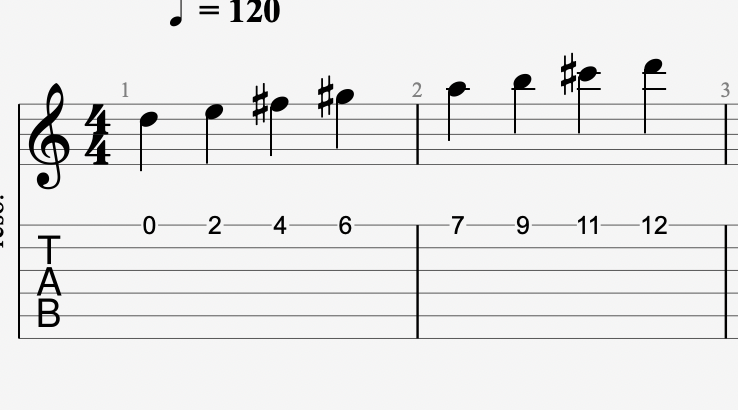
That piece eventually became Reverence Revisited and Kalyan Variations on my album True North. Worth a listen if you want to hear the mode in context.
https://open.spotify.com/track/6SKWRtwnAB2uwWs1w3LyET?si=9619b10169274832
https://open.spotify.com/track/4QRrtXDRuAdZvH0Vwx3sE1?si=7626e8a8ecd24f7e
What it did to my playing
The whole three months made me re-evaluate everything. Not just technique — the whole approach. The economy. The intention behind every note. The relationship between the slide and the voice.
Indian classical music can tell a story with just a few notes. The raga is a framework — a set of notes, a mood, a time of day — and within that framework the musician finds their own path. What you leave out is as important as what you put in. The space between notes carries as much meaning as the notes themselves.
Sound familiar? It should. We talked a few weeks ago about Dark Was The Night — Blind Willie Johnson telling a complete emotional story with no words, just a slide and a voice. And how Ry Cooder took that spirit and built the Paris Texas soundtrack from it — one of the most celebrated film scores ever made, telling everything with just a handful of notes.
That's the same discipline. The same understanding that what you leave out is as important as what you put in. Debashish Bhattacharya in Calcutta and Blind Willie Johnson in 1927 were reaching for exactly the same thing. They just had different names for it.
This week, I recommend:
Debashish Bhattacharya — 3: Calcutta Slide Guitar — find it on Spotify or YouTube. Don't try to analyse it. Just listen to the relationship between the slide and the voice — how the instrument seems to breathe and sing.
Try singing before you play — pick a simple phrase on the top string in Open D. Sing it first. Then play it. If the guitar version sounds more mechanical than the sung version — that gap is exactly where the work is.
Fred McDowell — You Gotta Move — find it on YouTube and listen before next week's newsletter. The slide and the voice are almost indistinguishable in this recording. The slide follows the vocal melody so closely it's hard to tell where one ends and the other begins. That's exactly what we've been talking about today — and next week we're going to look at it in detail. It's a piece I teach and one of the great examples of the slide as a voice. Get it in your ears first.
The vocal quality of the slide — making the instrument sing rather than just play notes — is something I work on with every student in the Slide Success programme. If you'd like to find out more about working with me, you can see my courses here or pick up your free Get Going with Slide Guide here.
See you on the back porch!