
I often talk about the fascinating roots of blues and slide guitar, and I thought it might be fun to take this blog off on a tangent, exploring the roots of English folk music instead!
English folk has a long and fascinating history, shaped by ordinary people and passed from one generation to the next. Unlike classical music, which was often written down and performed by trained musicians, folk music traditionally belonged to communities - like many of the traditions that created the blues. Songs were learned by listening and remembering, meaning that many survived for hundreds of years without ever being written down.
The roots of English folk music can be traced back to the Middle Ages. People sang while working, celebrating, travelling and telling stories. Songs often reflected everyday life, including love, farming, war and hardship. Traditional dances were also important, with instruments such as fiddles, pipes and drums providing music for village celebrations and social gatherings.
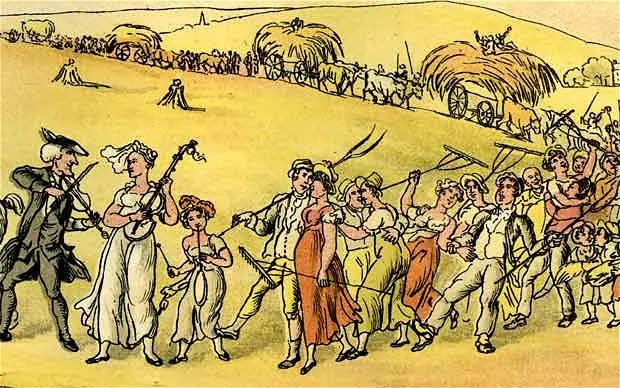
During the 16th and 17th centuries, folk songs continued to develop. Ballads became particularly popular. These were songs that told stories about real or imagined events, including battles, murders, romances and famous characters. Because songs were passed on by word of mouth, different versions of the same ballad could develop in different parts of England.
The Industrial Revolution brought major changes to English society during the 18th and 19th centuries. As people moved from rural areas into towns and cities, traditional music changed with them. New songs emerged about factory work, poverty, politics and working-class life. Folk music therefore became a way for people to express their experiences and preserve a sense of community during a period of rapid change.
In the late 19th and early 20th centuries, collectors became interested in preserving traditional songs. Figures such as Cecil Sharp travelled around England recording songs, dances and tunes from local communities. Their work helped prevent many pieces of music from disappearing, although modern researchers have also questioned some of the ways these collectors selected and presented traditional material.
The folk revival of the 1950s and 1960s introduced English traditional music to a new generation. Musicians such as Ewan MacColl and Martin Carthy helped bring folk songs into concert halls and clubs, while new performers combined traditional material with contemporary ideas.
Today, English folk music remains a living tradition rather than simply a piece of history. Artists continue to perform old songs while writing new ones inspired by traditional styles. Folk festivals, dance events and folk clubs can be found across England, helping keep the music alive.
From medieval villages to modern stages, English folk music has continually changed while retaining its connection to ordinary people's stories, experiences and communities.
Whether you love the folk scene in the UK, with our fabulous festivals and folk shows, or you are fascinated by the use of slide guitar in rock music, I've got a course for you! Grab your Get Going with Slide Guide or check out my courses here.
See you on the back porch!